 Pin it
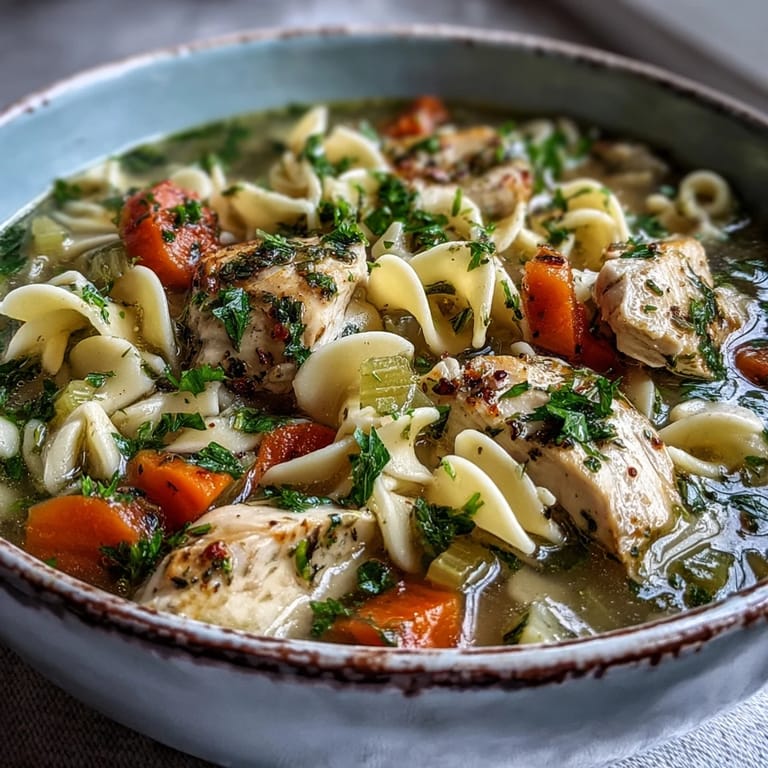
 My neighbor stopped by on a freezing afternoon with her daughter, both looking half-frozen from waiting for the school bus. Without thinking twice, I started pulling out chicken, carrots, and that box of egg noodles hiding in the pantry. Twenty minutes later, three bowls of steaming soup sat on the counter, and suddenly the kitchen felt like the warmest place in the world. That's when I realized this soup isn't just food—it's a small act of warmth you can offer someone on a day when they need it most.
I made this soup for my sister during her first winter in a new city, when she was feeling especially lonely. She called me that evening to say she'd eaten half the pot in one sitting, and the next morning she made it again herself. Now she sends me photos of her versions—sometimes with extra veggies, once with alphabet noodles for her son. It became our quiet language across the distance.
Ingredients
- Boneless, skinless chicken breasts (2, about 350 g, diced): Dice them into bite-sized pieces so they cook evenly and feel tender in every spoonful, not tough or chewy.
- Medium onion (1, diced): This is your flavor foundation, so don't skip it or rush it—the sweetness develops as it softens in the oil.
- Medium carrots (2, peeled and sliced): Slice them thin enough to cook through but thick enough to have some substance when you bite into them.
- Celery stalks (2, sliced): People often forget celery, but it adds a subtle earthiness that rounds out the whole bowl.
- Garlic cloves (2, minced): Fresh garlic makes the difference between bland and fragrant—use the smallest cloves if you can find them, as large ones can overpower.
- Low-sodium chicken broth (1.5 liters or 6 cups): Low-sodium lets you control the salt and prevents the soup from becoming overly salty as it simmers.
- Egg noodles (120 g or 4 oz): Don't use the thin ones if you can help it—medium egg noodles hold their shape and texture better.
- Bay leaf (1): This leaf infuses the broth with subtle depth; remember to fish it out before serving or warn people about it.
- Dried thyme (1/2 teaspoon): Thyme whispers herbaceousness without shouting, which is exactly what this soup needs.
- Dried parsley (1/2 teaspoon, plus extra for garnish): A pinch goes into the broth, and a fresh sprinkle on top at the end brightens everything.
- Salt and freshly ground black pepper (to taste): Taste as you go—the broth already has salt, so be gentle at first.
- Olive oil (2 tablespoons): Use a good one you'd actually pour over salad, not the cheapest bottle on the shelf.
Tired of Takeout? 🥡
Get 10 meals you can make faster than delivery arrives. Seriously.
One email. No spam. Unsubscribe anytime.
Instructions
- Soften your vegetables in oil:
- Pour olive oil into a large pot and let it warm over medium heat until it shimmers slightly. Add onion, carrots, and celery all at once, then let them sit for a minute before stirring so they start to caramelize at the edges. After 4 to 5 minutes, they'll have softened and turned sweet.
- Wake up the garlic:
- Stir in your minced garlic and let it cook for just about a minute—you'll smell when it's ready, that warm, toasty aroma that fills the whole kitchen. Don't let it brown or it'll taste bitter.
- Brown the chicken lightly:
- Add your diced chicken to the pot and stir it around for 3 to 4 minutes until the outside loses its raw pink color. You're not looking for a deep golden crust here, just enough cooking so it won't look scary when you ladle it into a bowl.
- Build your broth:
- Pour in all the chicken broth and add your bay leaf, thyme, parsley, salt, and pepper. Give it a good stir to combine everything, then turn the heat up slightly and let it come to a gentle boil—you'll see little bubbles breaking the surface steadily.
- Simmer the base:
- Once it's boiling, reduce the heat to medium-low and let everything simmer quietly for about 10 minutes. This gives the chicken time to cook through completely and lets all the flavors get to know each other.
- Add the noodles:
- Scatter the egg noodles into the pot and stir them in so they don't clump together. Let them simmer for 8 to 10 minutes, stirring occasionally, until they're tender and the chicken is cooked all the way through when you cut into a piece.
- Finish and taste:
- Fish out that bay leaf with a spoon or slotted spoon, then taste a spoonful of broth. Adjust the salt and pepper if it needs it—this is your moment to make it exactly right.
- Serve with warmth:
- Ladle the soup into bowls and sprinkle a tiny pinch of fresh parsley on top. Hand someone a bowl and watch their face soften as they bring that spoon to their mouth.
 Pin it
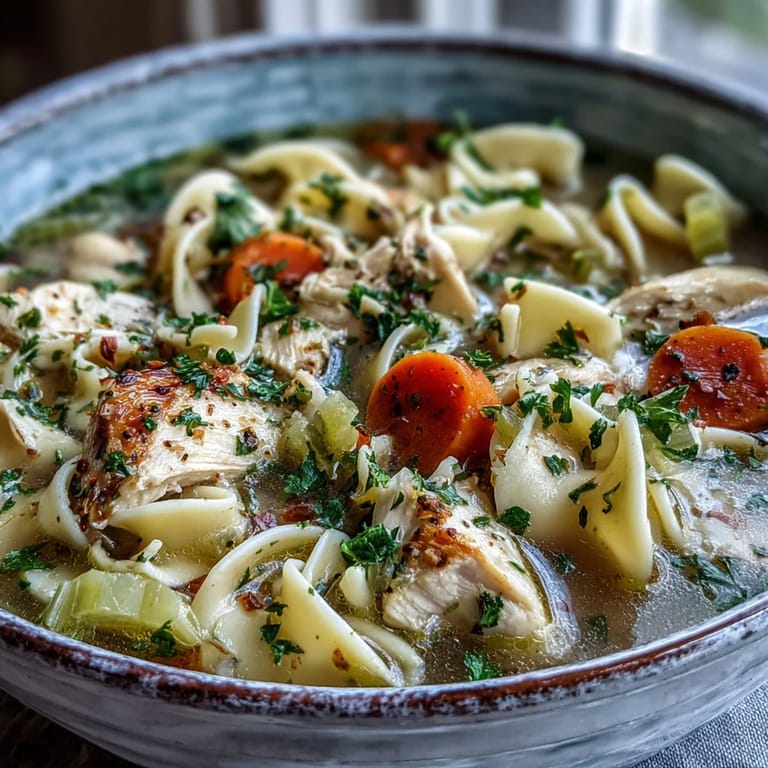
 My kid came home from school with a cold one gray afternoon, and all she wanted was this soup. Watching her slowly get better, bowl by bowl, taught me that the simplest recipes often do the most important work—they heal, they comfort, they remind us we're not alone.
When to Make This Soup
This is a soup for sudden cold snaps, for sick days, for when someone you love needs feeding fast. It's also perfect for cleaning out your vegetable drawer—if you have parsnips, green beans, or zucchini sitting around, toss them in during the last few minutes of cooking. The beauty of this recipe is its flexibility; it welcomes gentle additions without complaining.
The Art of Layering Flavor
The secret to this soup tasting like more than just the sum of its parts lies in building flavor step by step. Sautéing the vegetables first draws out their natural sugars and creates a sweet base before anything else happens. The garlic comes next, adding depth. Then the broth gets its herbs and time to meld.
Small Changes That Matter
If you want to elevate this beyond weeknight comfort, try stirring in a small splash of fresh lemon juice just before serving—it brightens everything without making it taste tangy. A grind of fresh white pepper instead of black can make the soup feel slightly more refined. And if you happen to have a fresh thyme sprig instead of dried, use it; the flavor is brighter and more alive.
- Bone-in chicken thighs make a richer, more flavorful broth if you have time to shred them after cooking.
- Add a handful of fresh spinach in the last minute of cooking for color and a quiet nutritional boost.
- Serve alongside crusty bread for soaking up every last drop of broth.
 Pin it
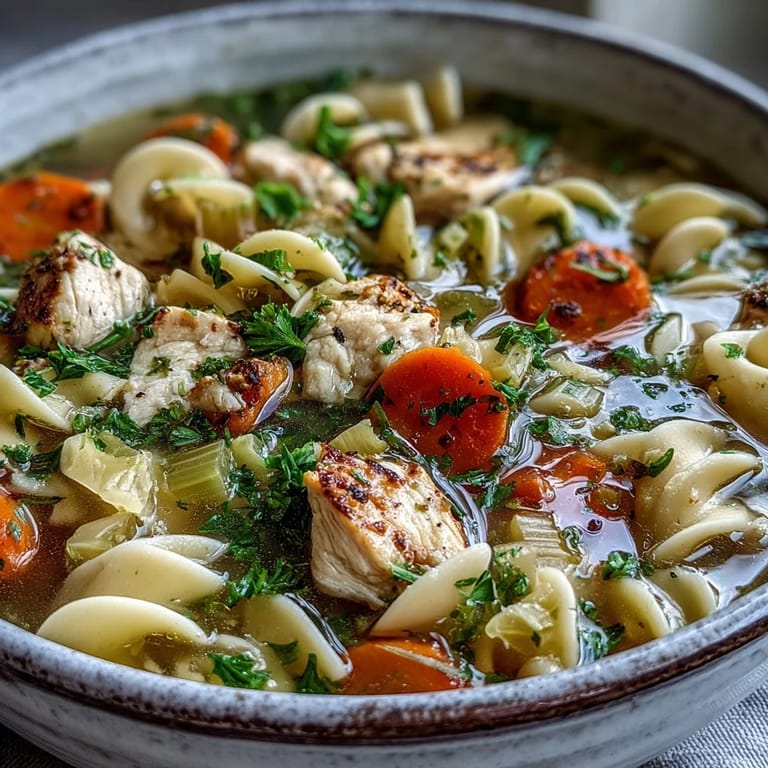
 This soup has fed people through moves, heartbreaks, celebrations, and ordinary Tuesday evenings. It asks very little of you but gives back generously in the way comfort food should.
Recipe Q&A
- → Can I use leftover cooked chicken instead of raw chicken breasts?
Yes, you can use about 2 cups of shredded cooked chicken. Add it during the last 5 minutes of cooking to heat through, reducing the overall simmering time.
- → What can I substitute for egg noodles?
You can use any pasta shape like rotini, penne, or shells. For gluten-free options, try rice noodles or gluten-free pasta. Adjust cooking time according to package directions.
- → How long can I store leftover chicken noodle soup?
Store in an airtight container in the refrigerator for up to 4 days. For freezing, store without noodles for up to 3 months, then add freshly cooked noodles when reheating.
- → Can I make this soup in a slow cooker?
Yes, combine all ingredients except noodles in the slow cooker. Cook on low for 6-7 hours or high for 3-4 hours. Add noodles during the last 30 minutes of cooking on high.
- → How can I make the broth more flavorful?
Use bone-in chicken thighs for richer flavor, add a splash of lemon juice or white wine, include fresh herbs like rosemary, or enhance with a parmesan rind during simmering.
- → What vegetables can I add or substitute?
Feel free to add peas, corn, green beans, or spinach. You can also include diced potatoes, parsnips, or turnips for extra heartiness. Add leafy greens in the last few minutes of cooking.