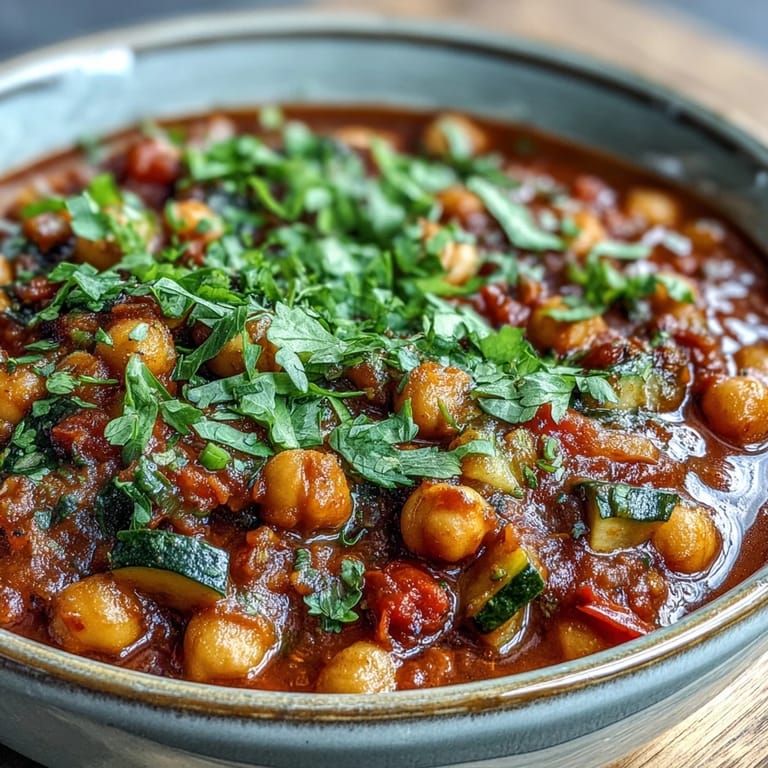
 Pin it
 There's something about the smell of cumin hitting hot oil that instantly transports me to a tiny kitchen in Athens, where a friend was teaching me how to build layers of flavor without any fuss. We made this spicy chickpea stew on a rainy afternoon, and I was struck by how something so simple—just vegetables, beans, and spices—could taste so alive and warming. That day, I stopped thinking of plant-based cooking as restrictive and started seeing it as an invitation to get creative with what I actually had on hand.
I served this to my neighbor last winter when her daughter was going through a phase of exploring plant-based eating, and she took one spoonful, then looked at me with genuine surprise. She said it was the first time she'd felt satisfied without meat, and we ended up talking for two hours about how food connects us to places we've never been. That bowl became proof that good food doesn't need to apologize for what it isn't.
Ingredients
- Olive oil: Use a good quality oil here—it's the foundation that carries all those spices into every bite, and you'll taste the difference.
- Onion, garlic, carrots, bell pepper, and zucchini: The vegetable base is flexible; if you have celery or fennel, use them instead, but stick with at least one allium to build that savory depth.
- Chickpeas: Rinse them well to remove excess starch, which helps the broth stay clear and lets the spices shine through.
- Ground cumin, coriander, smoked paprika, turmeric, and chili flakes: Toast these together for just a minute—that's the trick that makes them bloom into something extraordinary instead of tasting dusty.
- Sea salt and black pepper: Season in layers, not all at once, so you develop complexity rather than a one-note saltiness.
- Canned diced tomatoes and vegetable broth: The liquid base that becomes your sauce; don't skimp on broth quality here.
- Fresh spinach or kale and fresh herbs: Add these at the end to preserve their color and bite; they become your final bright note.
- Lemon juice: This is non-negotiable—it lifts everything and reminds your mouth that this is a celebration, not just sustenance.
Tired of Takeout? 🥡
Get 10 meals you can make faster than delivery arrives. Seriously.
One email. No spam. Unsubscribe anytime.
Instructions
- Build your base with heat and patience:
- Pour the olive oil into your pot and let it warm until it shimmers slightly, then add your diced onion. Sauté for 3 to 4 minutes, stirring occasionally, until the edges turn translucent and the smell starts to make your kitchen feel intentional. You're not rushing this—you're teaching the onion to become sweet.
- Layer in the vegetables and let them get to know each other:
- Add your minced garlic, diced carrots, bell pepper, and zucchini to the softened onion, then cook for another 5 minutes, stirring occasionally so nothing catches on the bottom. The vegetables should start to soften at the edges while still holding their shape—you're building texture.
- Wake up the spices and let them fill the room:
- Stir in your cumin, coriander, smoked paprika, turmeric, chili flakes, black pepper, and salt, then cook for exactly 1 minute, stirring constantly. This is the moment when your kitchen transforms; the fragrance should make you pause and breathe it in.
- Bring it all together with liquid and time:
- Add your chickpeas, diced tomatoes with their juice, and vegetable broth, stirring well to combine. Bring the mixture to a boil, then immediately reduce the heat to medium-low and let it simmer uncovered for 20 to 25 minutes, stirring occasionally so the flavors marry together and the liquid reduces slightly. The stew should look rich and cohesive, not watery.
- Finish with greens and brightness:
- Stir in your fresh spinach or kale and cook for just 2 to 3 minutes until it's wilted but still recognizable. Squeeze in the lemon juice, taste the stew, and adjust the salt, spices, or lemon to your preference—this is your moment to make it perfect for you.
- Serve with intention and presence:
- Ladle the stew into bowls, garnish generously with fresh cilantro or parsley, and serve while it's still steaming hot. This is best enjoyed slowly, with good company or good thoughts.
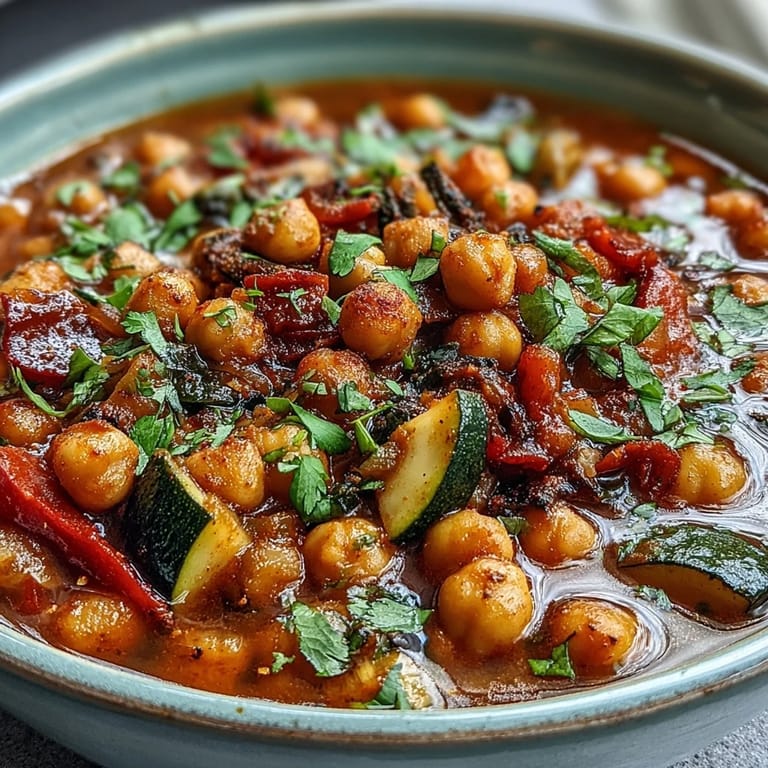 Pin it
 My partner has never been one for leftovers, but this stew changed that—they actually looked forward to reheating it the next day, claiming the flavors had settled into something even better. That's when I understood that not every recipe needs to be perfect on the first serving; sometimes the real magic happens in the quiet hours after you've cooked.
The Secret Behind the Flavor
The beauty of this stew lies in how the warm spices—cumin, coriander, and turmeric—work together to create an almost meditative warmth that feels grounding rather than aggressive. These aren't just flavor; they're functional tools that support your digestion and help your body process the chickpeas more easily. I learned this slowly, through small experiments and conversations with people who grew up cooking with these spices daily, and it fundamentally changed how I think about seasoning.
Make It Your Own
This recipe is a framework, not a prison. I've added roasted sweet potato on nights when I wanted more earthiness, swapped the zucchini for eggplant in late summer, and even added a splash of coconut milk when I wanted the stew to feel richer and more indulgent. The spice ratio is also entirely yours to adjust—some people want just a whisper of chili flakes, while others (like me) love to push it closer to genuinely spicy. The only thing I'd never change is the lemon at the end; it's the final element that transforms everything from hearty to vibrant.
Serving and Storage Wisdom
This stew is remarkably forgiving and actually improves as it sits, making it ideal for meal prep or feeding people across different days. Store it in an airtight container in the refrigerator for up to 5 days, or freeze it in portions for up to 3 months—though I rarely make it that far because it disappears quickly. Reheat gently over medium heat, adding a splash of broth or water if it's thickened too much, and always taste before serving to adjust the seasoning, as flavors can settle and shift during storage.
- Serve with crusty bread, brown rice, or quinoa to soak up every drop of the spiced broth.
- A dollop of plant-based yogurt or tahini sauce on top adds an unexpected richness that balances the warmth of the spices.
- Leftovers actually taste better the next day, so don't hesitate to make a double batch and enjoy the ease of having dinner already waiting.
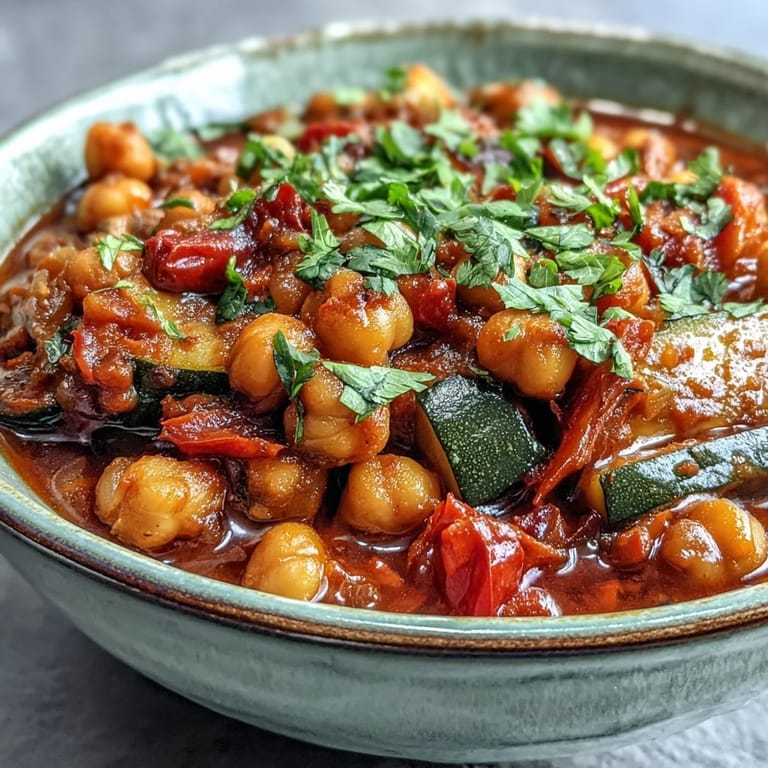 Pin it
 This spicy chickpea stew has become one of those recipes I return to not because it's easy or fast, but because it reminds me why I love cooking in the first place. It's proof that nourishment and pleasure don't need to be separate things.
Recipe Q&A
- → How spicy is this chickpea stew?
The heat level is moderate and adjustable. The half teaspoon of chili flakes provides gentle warmth without overwhelming the other flavors. Reduce or omit the flakes for a milder dish, or increase for extra spice.
- → Can I make this stew ahead of time?
Absolutely. This stew actually improves overnight as flavors meld. Store in an airtight container in the refrigerator for up to 4 days. Reheat gently on the stovetop, adding a splash of broth if needed.
- → What can I serve with spicy chickpea stew?
Crusty bread, brown rice, or quinoa are perfect accompaniments. The stew also pairs beautifully with roasted vegetables or a simple green salad. For added protein, serve alongside grilled halloumi or flatbread.
- → Is this stew freezer-friendly?
Yes, freeze portions for up to 3 months. Cool completely before transferring to freezer-safe containers. Thaw overnight in the refrigerator and reheat on the stovetop. The texture remains excellent after freezing.
- → How do I make this stew creamier?
Blend one cup of the finished stew and stir it back into the pot for added body. Alternatively, add a splash of coconut milk during the final minutes of cooking, or stir in a tablespoon of tahini when serving.
- → Can I use dried chickpeas instead of canned?
Certainly. Soak one cup of dried chickpeas overnight, then simmer for 60-90 minutes until tender. You'll need about 3 cups of cooked chickpeas to replace the canned version in this stew.