 Pin it
 The aroma of pine nuts toasting in a dry pan always transports me back to my grandmother's tiny kitchen in Palermo, where she'd hum old folk songs while rolling beef bundles with weathered hands that moved with practiced grace. I watched her morning after morning during that summer visit, fascinated by how she could transform tough cuts of meat into something so tender and luxurious without measuring a single thing. Now whenever I make braciole, I can almost hear her voice explaining that the secret lies not in precision but in patience—that sweet and savory filling needs time to work its magic. The first time I attempted it alone, I tied the kitchen twine too tightly and the filling squeezed out, creating a chaotic but delicious mess that still had everyone reaching for seconds.
Last Christmas Eve, I made a double batch for my extended family, and my uncle who swore he hated raisins in savory dishes ended up going back for thirds. There's something about presenting a platter of these beautiful browned rolls, glistening with red sauce, that makes people lean in closer to the table. My cousin asked for the recipe before she'd even taken her first bite, just based on how incredible it smelled coming out of the kitchen.
Ingredients
- Thin beef slices: Top round or flank steak works best here—pound them gently to an even thickness so they roll easily and cook uniformly
- Pecorino cheese: This sheep's milk cheese brings a sharp salty kick that cuts through the richness of the beef and sweet raisins
- Pine nuts: Lightly toasting them first releases their natural oils and deepens their buttery flavor significantly
- Raisins: The sweetness is traditional and essential—dont skip them or substitute with something else
- Fresh herbs: Parsley provides brightness while basil adds an aromatic sweetness that complements the filling beautifully
- Garlic: Use it generously in both the filling and the sauce for layers of flavor throughout
- Breadcrumbs: These help bind the filling together and absorb moisture so the stuffing doesn't become soggy
- Kitchen twine: Cotton butcher's string is ideal because it won't melt during the long simmer time
- Crushed tomatoes: Whole canned tomatoes crushed by hand give the sauce a rustic texture perfect for spooning over everything
- Red wine: A splash adds depth and acidity—Nero d'Avola or any full-bodied red will work wonderfully
Tired of Takeout? 🥡
Get 10 meals you can make faster than delivery arrives. Seriously.
One email. No spam. Unsubscribe anytime.
Instructions
- Prepare the beef:
- Lay each steak flat between plastic wrap and pound gently until evenly thin—season both sides generously with salt and pepper
- Make the filling:
- Combine the pecorino, toasted pine nuts, raisins, parsley, basil, garlic, and breadcrumbs in a bowl until everything is evenly distributed
- Roll and tie:
- Spread filling over each beef slice leaving a border, roll tightly from the short end, tuck in sides, and secure with kitchen twine tied at intervals
- Sear the braciole:
- Heat olive oil in a large skillet and brown the rolls on all sides until deeply colored—this creates fond that becomes the base of your sauce
- Build the sauce base:
- In the same pan, sauté onion until soft and translucent, then add garlic for just one minute until fragrant but not browned
- Deglaze and simmer:
- Pour in red wine and let it bubble away by half, scraping up all those delicious browned bits from the bottom
- Add tomatoes:
- Stir in crushed tomatoes, oregano, salt, pepper, and a pinch of sugar if needed, bringing everything to a gentle bubble
- Braise slowly:
- Return the braciole to the sauce, cover, and simmer over low heat for at least an hour and fifteen minutes, turning occasionally
- Finish and serve:
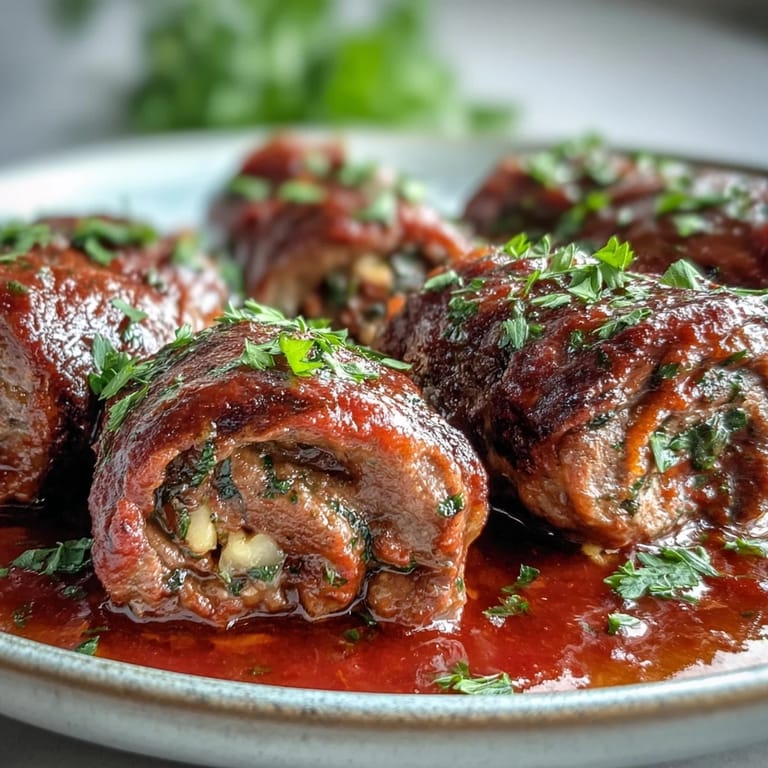
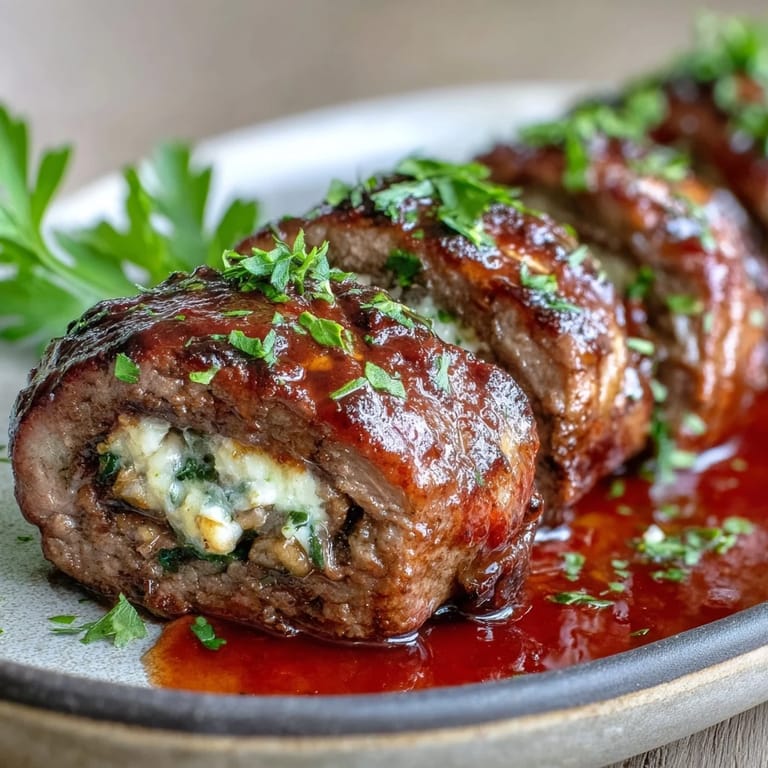
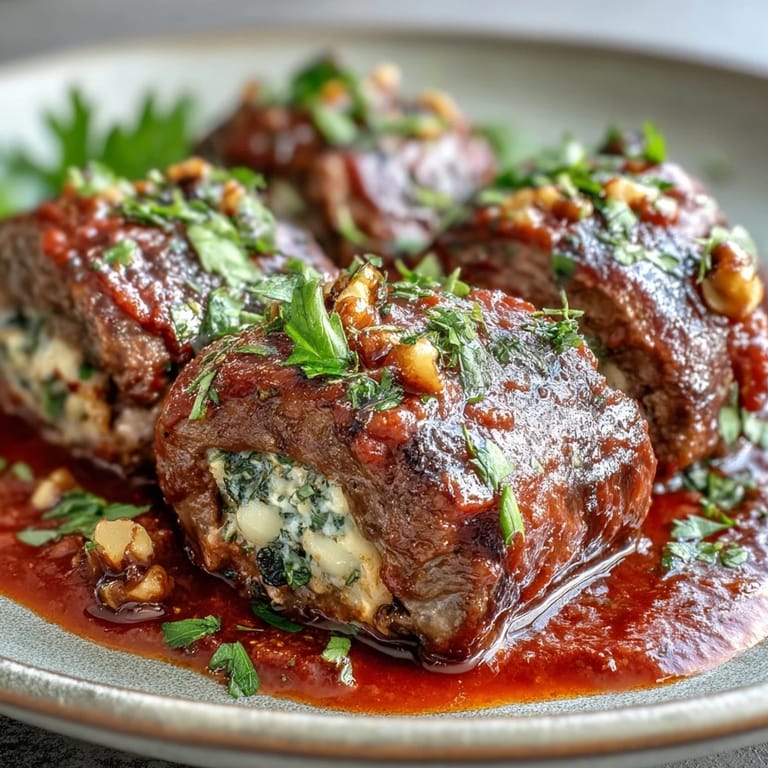
- Remove the beef rolls, discard the twine, slice into beautiful pinwheels, and serve with plenty of that rich tomato sauce ladled over the top
 Pin it
 My grandmother used to say that braciole tastes better the next day, and she was absolutely right—the flavors meld and intensify beautifully overnight. I now purposefully make extra just so I can enjoy leftovers for lunch the following day, preferably heated slowly in a small pan while standing at the counter.
Choosing the Right Cut
Flank steak has excellent grain that holds up well to rolling and braising without falling apart during the long cooking time. Top round is more budget-friendly but requires slightly more careful pounding to achieve the right thinness—avoid cuts that are too thick or they'll need much longer cooking to become tender.
Sauce Secrets
Start with a good-quality canned tomato—San Marzano varieties from Italy have naturally sweet flesh that needs less sugar to balance acidity. Let the sauce develop slowly rather than rushing it with high heat, and taste as you go since the salt concentration will intensify as the sauce reduces.
Make Ahead Magic
Braciole is one of those dishes that actually improves when made ahead—you can prepare everything up to two days in advance and refrigerate before the final reheating. The flavors have time to marry and penetrate deeper into the beef, and the sauce thickens beautifully in the refrigerator.
- Reheat gently with a splash of water to loosen the sauce if it has thickened too much
- The rolls slice more cleanly when allowed to rest for 10 minutes before cutting
- Freeze uncooked braciole wrapped tightly for up to 3 months, then thaw and cook as directed
 Pin it
 There's something profoundly satisfying about serving a dish that has such humble beginnings but tastes absolutely luxurious. Every time I place that platter on the table, I think about how recipes carry stories across generations, connecting us to people and places we love.
Recipe Q&A
- → What cut of beef is best for braciole?
While top round or flank steak are traditional, you can also use thin slices of sirloin or even venison for a richer flavor. The key is to choose a cut that can be pounded thin and rolled easily, becoming tender with slow cooking.
- → Can I make Sicilian braciole ahead of time?
Absolutely! Braciole often tastes even better the next day as the flavors meld. Prepare and cook it fully, then cool and refrigerate for up to 3-4 days. Reheat gently on the stovetop or in the oven.
- → What are common accompaniments for this dish?
This rich dish pairs wonderfully with a variety of sides. Consider serving it with al dente pasta (like rigatoni or pappardelle), creamy polenta, crusty Italian bread to sop up the sauce, or a simple green salad to balance the richness.
- → Can I substitute the pine nuts or raisins?
For pine nuts, walnuts or almonds, finely chopped and lightly toasted, can be used. If you dislike raisins, dried cranberries or currants offer a similar sweet-tart contrast. However, the original combination is classic for its unique flavor profile.
- → What if I don't have kitchen twine or toothpicks?
If you lack twine or toothpicks, you can try to secure the rolls by placing them seam-side down in the simmering sauce. The gentle braising can often hold them together, but twine or picks offer the best security against unraveling.
- → Is red wine essential for the sauce?
While red wine adds depth and complexity, it is listed as optional. You can easily omit it and use an equal amount of beef broth or water to deglaze the pan. The sauce will still be delicious and flavorful.