 Pin it
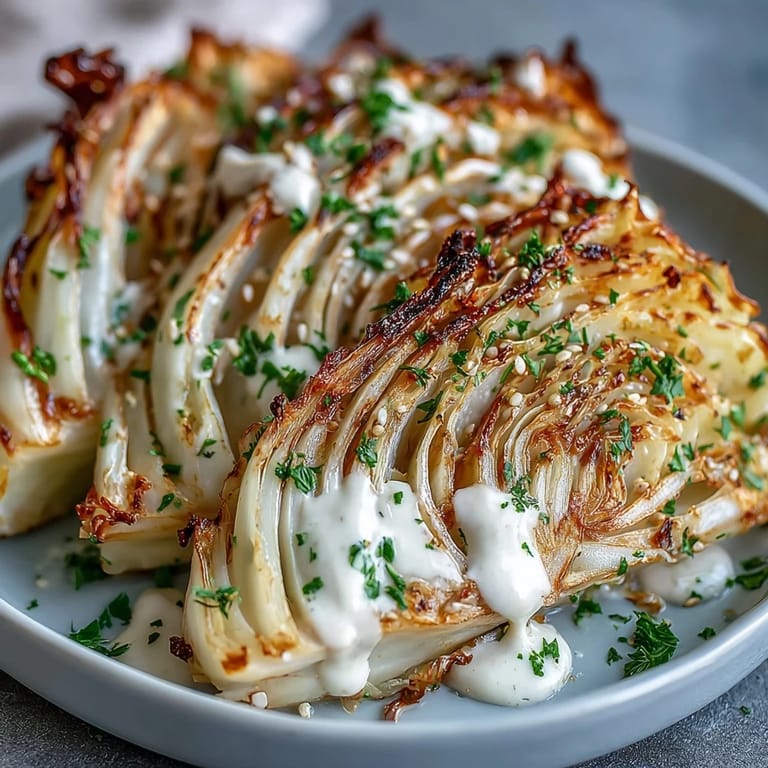
 My neighbor handed me a wedge of roasted cabbage at a potluck last spring, dripping with something golden and impossibly creamy, and I was skeptical until the first bite—nutty, bright, with that tender char that made cabbage feel like a revelation. I went home that night and spent an hour trying to recreate what she'd made, texting her increasingly desperate questions until she finally laughed and sent over her tahini sauce ratio. Now it's become my go-to when I want something that tastes fancy but requires barely any effort, and honestly, it's converted a few cabbage doubters along the way.
I made these for my sister's dinner party last month when she mentioned wanting something healthier but still impressive, and watching people go back for thirds of roasted cabbage was genuinely hilarious. She asked for the recipe immediately, then texted me a photo of her attempt the next week—her tahini sauce had broken into a grainy mess because she'd added the water too fast, so I learned to emphasize that slow drizzle is everything. Now it's become our running joke, but also proof that even tiny technique shifts make all the difference with this one.
Ingredients
- 1 medium green cabbage (about 2 lbs), cut into 8 wedges, core intact: Keeping the core in holds everything together while roasting, and it becomes tender and almost sweet by the end—this detail matters more than you'd think.
- 2 tbsp olive oil: Good olive oil makes a real difference here since it's not hidden in a cooked sauce, so don't reach for the bottom-shelf bottle.
- 1/2 tsp kosher salt and 1/4 tsp freshly ground black pepper: Season generously before roasting; the salt draws out moisture and creates those crispy, caramelized edges.
- 1/3 cup tahini: The foundation of your sauce—get the kind that's just ground sesame seeds with no added oils or stabilizers if you can, it tastes cleaner.
- 1 small garlic clove, finely grated: Grating releases the garlic's oils more fully than mincing, giving you a smoother, more integrated sauce.
- 2 tbsp fresh lemon juice: Fresh is non-negotiable here; bottled lemon juice will taste hollow and thin against the tahini's richness.
- 2–4 tbsp cold water: Add it slowly, one tablespoon at a time, whisking constantly—this is how you avoid a broken, grainy mess.
- 1/4 tsp ground cumin and 1/4 tsp kosher salt: These warm up the sauce and balance the tahini's earthiness without overwhelming it.
- Optional garnish: toasted sesame seeds, fresh parsley or cilantro, smoked paprika or Aleppo pepper: These finish the dish with texture and color, but they're truly optional—the cabbage and sauce are complete on their own.
Tired of Takeout? 🥡
Get 10 meals you can make faster than delivery arrives. Seriously.
One email. No spam. Unsubscribe anytime.
Instructions
- Heat your oven and prep your sheet:
- Get the oven to 425°F and line your baking sheet with parchment paper so nothing sticks and cleanup is painless.
- Arrange and dress the cabbage:
- Lay those cabbage wedges cut-side down on the sheet, drizzle them evenly with olive oil, then scatter the salt and pepper over everything. The cut sides will catch the heat and brown beautifully.
- Roast until golden and tender:
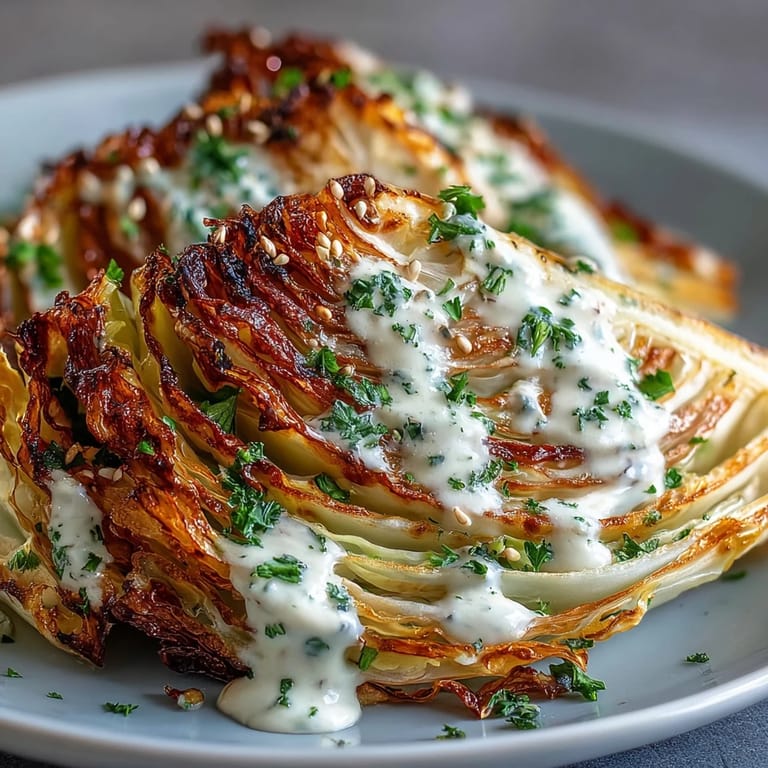
- Slide the sheet into the oven and let it go for about 12 to 15 minutes, then flip each wedge over and keep roasting for another 12 to 15 minutes until the edges are deep brown and crispy and a fork slides through the cabbage easily. You'll smell when it's close—that nutty, caramelized aroma is your signal.
- Whisk together your tahini sauce:
- While the cabbage roasts, combine the tahini, grated garlic, lemon juice, cumin, and salt in a bowl and whisk it smooth. Now here's the crucial part: add the cold water one tablespoon at a time while whisking constantly, letting each bit incorporate fully before adding more.
- Plate and finish:
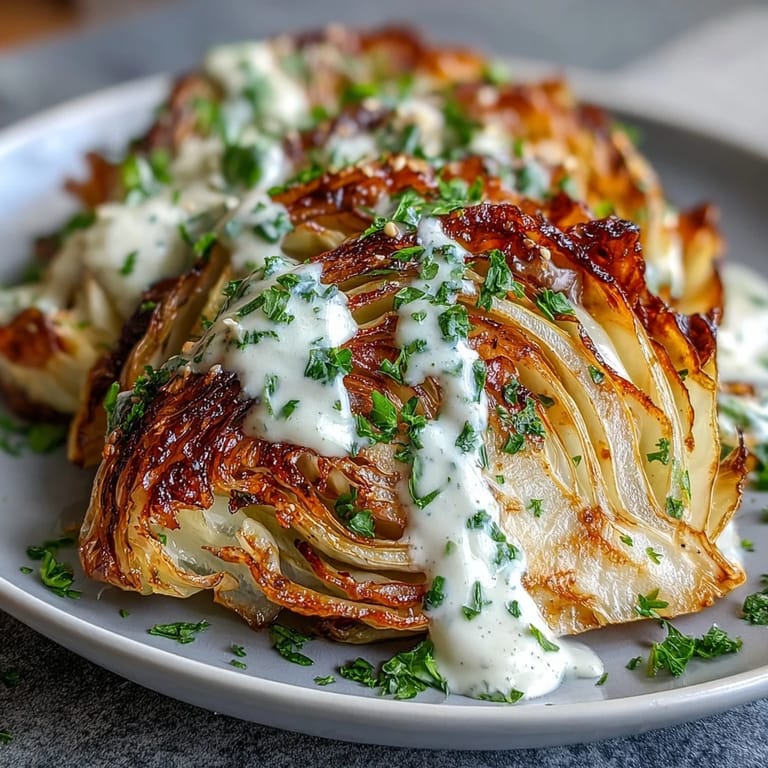
- Transfer those golden cabbage wedges to a serving platter, drizzle them generously with the tahini sauce, then scatter over the sesame seeds, fresh herbs, and a pinch of paprika if you're using them. Serve warm or at room temperature—both are wonderful.
 Pin it
 A friend's young daughter told me this was the only vegetable she'd ever voluntarily eaten twice, which made me realize how much a little char and creamy sauce can shift someone's entire relationship with food. That moment reminded me that the best recipes aren't just about technique or ingredients—they're about creating something that lands differently for different people.
Why This Cabbage Stays Crispy
The trick to avoiding mushy roasted cabbage is all about heat and patience—425°F is hot enough to caramelize the edges before the inside gets soggy, and flipping halfway through ensures both sides get that golden treatment. Don't crowd the pan and don't cover it; you want the moisture to escape, not steam the cabbage back into submission. I learned this the hard way after making a too-hot oven that burned the outside while leaving the inside raw, then overcorrecting with a lower temperature that just steamed everything pale.
Tahini Sauce Rescue Techniques
If your sauce does seize up or turn grainy—and it will happen at least once—start over with a fresh tablespoon of tahini and a tablespoon of cold water, whisk them together until smooth, then slowly add your broken sauce back in, whisking constantly. Another lifeline is whisking in a teaspoon of water at a time if the sauce gets too thick; it should pour easily but coat a spoon, almost like heavy cream. I keep a little bowl of cold water nearby when I'm making this so I can dip my whisk in between additions, which keeps everything cool and prevents any quick temperature changes.
Serving and Storage Ideas
This dish lives happily at room temperature, which makes it perfect for meal prep or bringing to potlucks—it doesn't need to be piping hot to be delicious, so you've got real flexibility. Leftovers keep in an airtight container for about three days, and you can warm them gently in a low oven if you want them warm again, or eat them cold straight from the fridge. A few last thoughts as you head into the kitchen:
- Serve these alongside rice, quinoa, or warm pita bread if you want something more filling and complete.
- Red cabbage works too, though it might need an extra few minutes of roasting and the color will stain your cutting board like nobody's business.
- If you like heat, scatter some chili flakes over the top, or if you want brightness without spice, pomegranate seeds scattered over the finished dish add tartness and visual pop.
 Pin it
 This has become one of those recipes I make without thinking, the way you might make a grilled cheese or scrambled eggs—simple enough that it requires no real effort, but with enough personality that it always feels intentional. That's the real magic of it.
Recipe Q&A
- → How do I get the cabbage wedges to char properly?
Preheat your oven to 425°F and arrange wedges in a single layer without overcrowding the pan. Flip halfway through cooking to ensure even browning on both sides.
- → Can I make the tahini sauce ahead of time?
Yes, prepare the sauce up to 3 days in advance and store in an airtight container in the refrigerator. Whisk in a splash of water before serving to restore consistency.
- → Why does my tahini sauce sometimes seize up?
This happens when cold liquid hits the tahini too quickly. Keep whisking vigorously and gradually add water—it will smooth out into a creamy consistency.
- → Can I use red cabbage instead?
Absolutely. Red cabbage works well and adds vibrant color, though it may require an extra 5-10 minutes of roasting time to become tender.
- → What else can I serve with this dish?
Pair with roasted chicken, grilled lamb, or falafel. It also complements grain bowls, rice pilaf, or can be enjoyed on its own with crusty bread.
- → How do I store leftovers?
Store roasted cabbage and sauce separately in the refrigerator for up to 3 days. Reheat cabbage in a 350°F oven until warmed through.