 Pin it
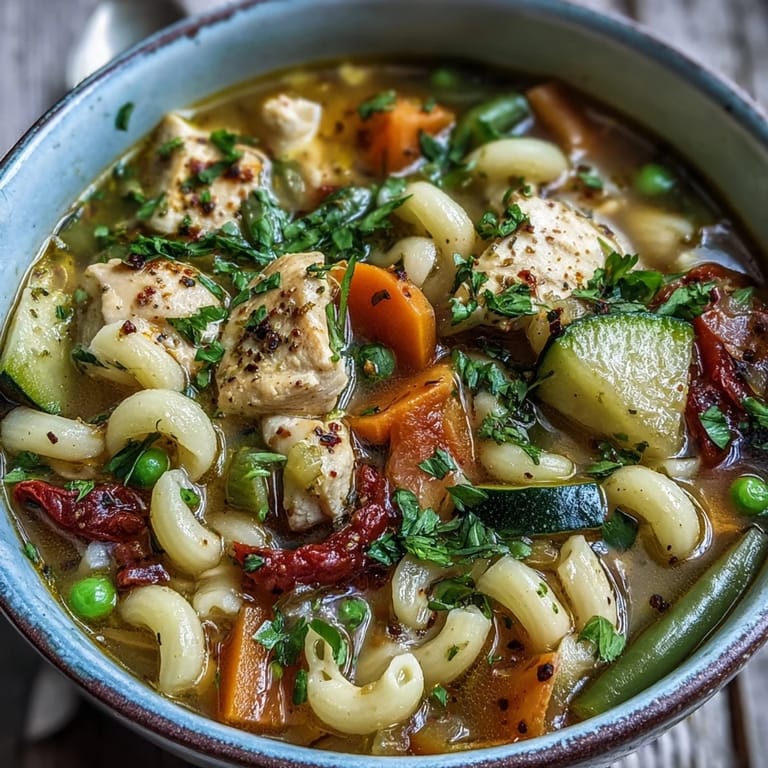
 There's something about a steaming bowl of pasta soup that stops you mid-conversation. My neighbor brought over a pot of this one November afternoon when the kitchen felt especially cold, and I watched my kids abandon their tablets completely, drawn by the aroma of simmering broth and vegetables. That's when I realized this wasn't just another soup recipe—it was the kind of dish that somehow makes a regular Tuesday feel intentional and gathered. The combination of tender chicken, soft pasta, and vegetables cooking together creates something greater than the sum of its parts.
I made this for my sister during one of those seasons when life felt overwhelming, and she texted me hours later saying she'd reheated it three times. That detail stuck with me—not because of the compliment, but because it proved the soup actually tastes better the next day when the flavors have time to know each other. Now I deliberately make a double batch on Sunday afternoons, partly for the week ahead, but mostly for those unexpected moments when someone needs a warm bowlful of proof that things will be okay.
Ingredients
- Chicken breasts: Cutting them into half-inch cubes means they cook quickly and stay moist—much better than waiting for whole breasts to finish.
- Carrots and celery: These form the flavor foundation that makes the broth actually taste like something, not just hot water with chicken.
- Onion and garlic: The garlic goes in after the onion softens, which prevents it from burning and turning bitter—a lesson I learned the hard way.
- Zucchini and green beans: They add texture and keep the soup from feeling like baby food, plus they're forgiving if you slightly overcook them.
- Frozen peas: I use frozen because they're just as nutritious and won't fall apart like fresh ones sometimes do during the final simmer.
- Diced tomatoes: The acidity brightens everything and adds a subtle depth that people always ask about.
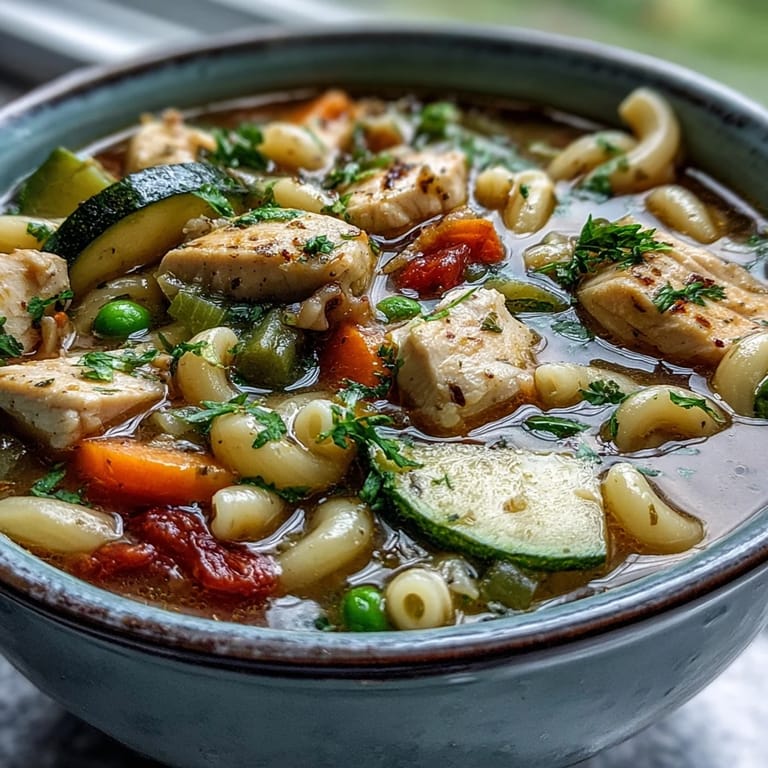
- Small pasta shapes: Ditalini or elbow macaroni work perfectly because they're small enough to eat with a spoon and actually cook within the soup's timeline.
- Chicken broth: Low-sodium lets you control the salt level and prevents the soup from tasting tinny or overseasoned.
- Thyme and basil: These dried herbs carry the aromatic load without overpowering the delicate chicken flavor.
- Fresh parsley: Stirred in at the end, it adds brightness and makes the soup feel intentional rather than just practical.
Tired of Takeout? 🥡
Get 10 meals you can make faster than delivery arrives. Seriously.
One email. No spam. Unsubscribe anytime.
Instructions
- Build your base:
- Heat the olive oil over medium heat and add your onion, carrots, and celery together. Let them sauté for about five minutes until the onion becomes translucent and the kitchen starts to smell like home. You'll know they're ready when the celery turns slightly tender.
- Bring in the aromatics:
- Add the minced garlic and let it cook just one minute—this is crucial because garlic burns quickly and tastes acrid if you're not paying attention. You'll smell it immediately, and that's your signal to move forward.
- Sear the chicken:
- Stir in the cubed chicken and cook for four to five minutes until the outside loses its raw look but the inside isn't fully cooked yet. This isn't about creating a golden crust; it's just about setting the protein so it doesn't break apart during the long simmer.
- Add vegetables and aromatics:
- Toss in the zucchini, green beans, canned tomatoes with their juice, thyme, basil, bay leaf, salt, and pepper all at once. Stir everything together so nothing gets stuck to the bottom of the pot.
- Simmer the foundation:
- Pour in the chicken broth and bring the whole pot to a boil, then reduce the heat, cover it, and let it simmer for fifteen minutes. This gentle cooking lets the vegetables soften and the flavors start marrying together.
- Finish with pasta:
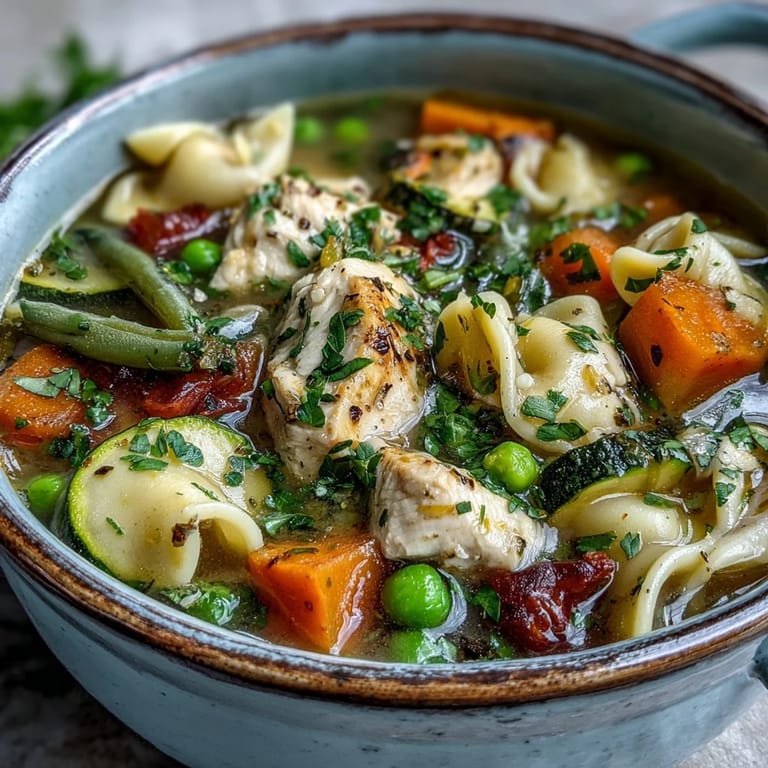
- Add the pasta and frozen peas directly to the simmering broth and cook uncovered for ten to twelve minutes until the pasta reaches that perfect al dente texture. Stir occasionally so the pasta doesn't stick to the bottom.
- Final touches:
- Fish out the bay leaf, stir in the fresh parsley, and taste everything before serving. Adjust salt and pepper if needed—remember that the broth is already seasoned, so go easy.
 Pin it
 My daughter once asked if this soup had magic in it because she suddenly wanted to eat vegetables, and I realized that's exactly what good cooking is—making people forget they're eating something nutritious. There's no trickery here, just attention to detail and the confidence that simple ingredients done thoughtfully are always enough.
Vegetable Flexibility
One of the reasons this soup stays in regular rotation is that it honestly doesn't care what vegetables you use. I've made it with spinach instead of zucchini, swapped corn for green beans, and even added bell peppers when I had them. The only rule that matters is keeping the cuts roughly the same size so everything cooks in the same amount of time. Winter feels like the right season for this soup, but I've made it successfully in summer too—just serve it slightly warmer than room temperature when the weather turns hot.
Pasta Timing and Texture
The pasta addition is where many soup recipes fail because they add it too early and end up with mushy strings instead of distinct little shapes. This recipe waits until the final phase, which means the pasta cooks in just the right amount of time while staying separate and toothsome. If you're nervous about timing, taste the pasta at the nine-minute mark to see where it stands—you can always cook it a bit longer if needed. The key is uncovered cooking because the lid traps steam and can overcook the pasta before the chicken fully cooks through.
Make It Your Own
This soup is a template more than a strict rule, which means it invites experimentation and personal adjustments. You might add ginger for warmth, a pinch of red pepper flakes for subtle heat, or even a splash of white wine before the broth for complexity. The beauty is that once you understand how the basic technique works, you can trust your instincts and your pantry to guide what comes next.
- Use rotisserie chicken if you want to skip the searing step—add it during the pasta phase so it just needs heating through.
- Make it gluten-free by swapping in rice pasta or gluten-free shapes, which cook similarly to regular pasta in this type of soup.
- Freeze leftover portions in containers and reheat gently on the stovetop with a splash of broth to loosen things up.
 Pin it
 This soup asks very little of you but gives back warmth, nourishment, and the quiet satisfaction of having made something that matters. Keep a pot of this on the stove whenever someone you care about needs reminding that good things are still possible.
Recipe Q&A
- → Can I use leftover chicken instead of raw chicken breasts?
Yes, rotisserie or leftover cooked chicken works perfectly. Add it during the last 10 minutes with the pasta to heat through without overcooking.
- → What pasta shapes work best for this soup?
Small pasta shapes like ditalini, elbow macaroni, orzo, or small shells work best as they're easy to eat with a spoon and cook evenly in the broth.
- → How can I make this soup gluten-free?
Simply substitute regular pasta with your favorite gluten-free pasta variety and ensure your chicken broth is certified gluten-free.
- → Can I freeze this soup for meal prep?
Yes, but cook the pasta separately and add it when reheating. Pasta can become mushy when frozen in liquid. The soup base freezes well for up to 3 months.
- → What vegetables can I substitute or add?
Feel free to swap in corn, spinach, bell peppers, or kale. You can also add potatoes or butternut squash for a heartier version.
- → How do I store leftovers?
Store in an airtight container in the refrigerator for up to 4 days. The pasta will absorb liquid, so add extra broth when reheating.