 Pin it
 My mom called on a Tuesday morning asking if I could make her Eggs Benedict for Mother's Day brunch, and I froze—I'd never attempted hollandaise before. Something about that emulsified sauce seemed to belong in a fancy restaurant kitchen, not mine. But standing there with the phone pressed to my ear, I realized she wasn't asking for perfection; she was asking for the effort. That afternoon, I bought fresh eggs and lemons, and by Sunday morning, I'd cracked the code on what makes this dish feel like love on a plate.
The Sunday I finally served this to my family, my dad cut into his egg and the yolk ran golden across the muffin, and he just went quiet for a moment—the kind of quiet that means something landed right. My sister asked for the recipe immediately, and my mom saved the plate as if I'd created something precious. That's when I understood: Eggs Benedict isn't just about technique; it's about showing up for people with breakfast that tastes like you spent time thinking about them.
Ingredients
- English muffins: Toast them properly so they're crispy enough to support the weight of the egg and sauce without falling apart—a soggy foundation ruins everything.
- Canadian bacon: This briny, slightly sweet meat is the backbone of the classic version, but a quick sear in a hot skillet brings out its best edges.
- Large eggs: Freshness matters here, especially for poaching—older eggs have runny whites that spread too thin, so use the best ones you can find.
- White vinegar: Just a splash acidifies the poaching water and helps the egg whites set faster without affecting the taste.
- Egg yolks: Make sure they're separated cleanly with no white mixed in, or your hollandaise will have a grainy texture instead of that silky finish.
- Lemon juice: Fresh squeezed makes all the difference—bottled juice tastes flat and won't brighten the sauce the way live citrus does.
- Unsalted butter: Warm it gently so it's pourable but not smoking, otherwise you'll scramble the yolks the moment it hits the bowl.
- Cayenne pepper: Just a pinch—this isn't about heat, it's about a whisper of spice that makes you wonder what you're tasting.
Tired of Takeout? 🥡
Get 10 meals you can make faster than delivery arrives. Seriously.
One email. No spam. Unsubscribe anytime.
Instructions
- Make the hollandaise first:
- Fill a saucepan with an inch of water and let it simmer gently while you set a heatproof bowl on top—the bowl should hover above the water without touching it, creating a double boiler. In the bowl, whisk egg yolks and fresh lemon juice together for about a minute until they lighten slightly and become ribbony.
- Slowly drizzle in the warm butter:
- This is where patience wins—add the butter a few drops at a time while whisking constantly, letting each addition fully incorporate before adding more. Once it's halfway in, you can be a little braver with the pouring, but keep whisking; when it's done, it should coat the back of a spoon and look like liquid gold.
- Season and keep it warm:
- Taste the sauce and add salt, then a small pinch of cayenne for depth. Pour it into a warm bowl and cover it loosely—hollandaise can handle sitting for 10 minutes or so, just not over direct heat.
- Brown the Canadian bacon:
- While the sauce rests, heat a skillet over medium heat and lay in the bacon slices, cooking them about a minute per side until the edges curl slightly and the surface has some caramel. Don't overcook or it'll be tough; you want it warm and just kissed with color.
- Poach the eggs gently:
- Bring a large pot of water to a bare simmer (small bubbles drifting up, not a rolling boil), add a splash of vinegar, and swirl the water with a spoon. Crack one egg into a small bowl first, then gently slide it into the center of the swirl and let it cook undisturbed for 3 to 4 minutes until the white is set but the yolk still jiggles when you nudge it.
- Assemble with care:
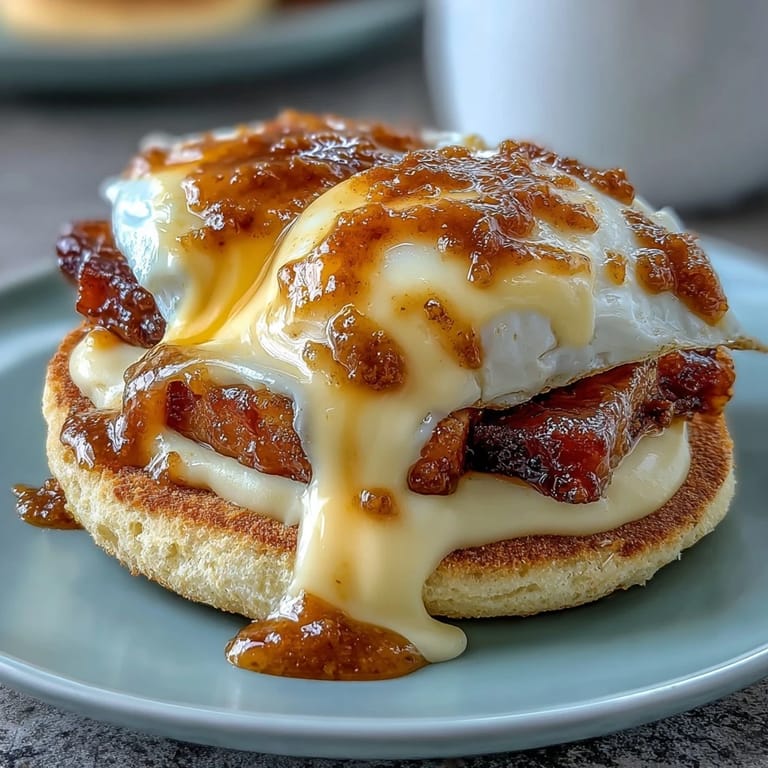
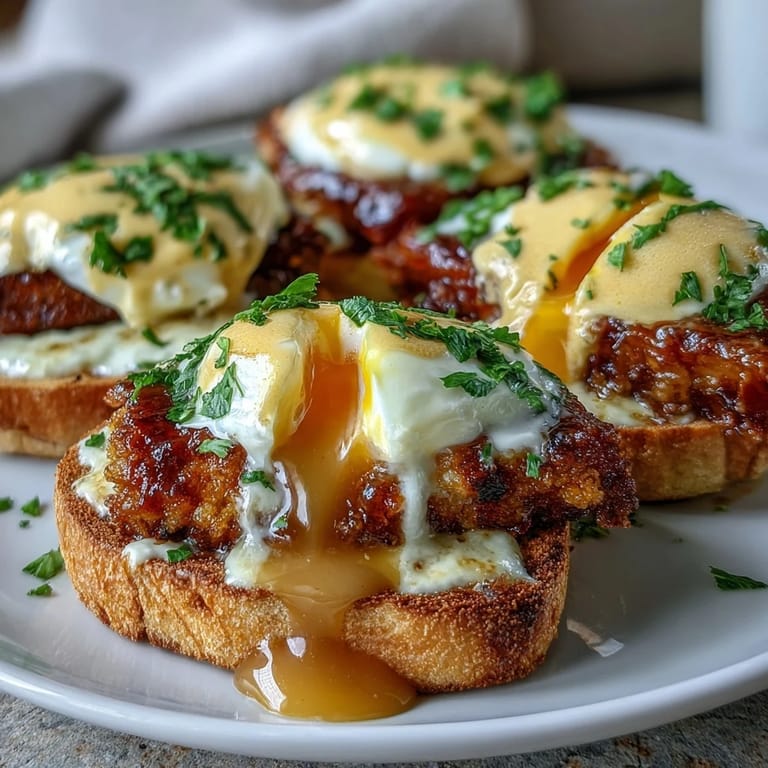
- Place two toasted muffin halves on each plate, lay a slice of warm bacon on each half, and carefully lift a poached egg onto the bacon using a slotted spoon. Spoon enough hollandaise to generously coat each egg, scatter chives over the top if you have them, and get it to the table while everything is still warm.
 Pin it
 There was a morning when everything went wrong at once—the hollandaise started to look grainy, one of my eggs spread like a jellyfish across the poaching water, and the muffins came out burnt on one side. But I kept going anyway, scraping off the burnt bits and fixing the sauce with a splash of cold water and a confident whisk. When I sat down to eat it, imperfect as it was, I realized the real point: this dish is about the ritual and the care, not the flawlessness.
The Temperature Dance
The single most important thing I learned is that Eggs Benedict is all about managing heat differently in three places at once. Your double boiler needs to be hot enough to thicken the hollandaise but not so hot that the eggs scramble; the poaching water needs to be barely moving, a whisper of steam rather than a boil; and the bacon skillet needs to be medium heat so the meat browns without hardening into a chip. I used to rush everything and end up with a broken sauce and rubbery eggs, but once I slowed down and gave each element its own space to cook properly, the whole thing came together.
Why Brunch Demands This Dish
There's something about Eggs Benedict that says you're making an occasion out of an ordinary weekend morning. It's elegant without being fussy, special without requiring a decade of culinary training, and it tastes like someone took time to think about breakfast. When you serve this to people, even imperfectly, they feel seen—like brunch isn't just a meal, it's a small ceremony.
Variations and Extensions
Once you master the classic, the beauty is that hollandaise is the same canvas for endless variations. Sautéed spinach underneath the egg becomes Eggs Florentine, or sliced avocado transforms it into Eggs California—both feel just as luxurious as the original. The sauce works beautifully over roasted asparagus and grilled tomato halves if you want to go vegetarian, or try it with smoked salmon for a brunch that feels almost decadent.
- Keep a batch of hollandaise in a warm thermos if you're cooking for a crowd; it'll hold for about 30 minutes without breaking.
- Toast your muffins right before assembling so they stay crispy against the heat of the sauce and eggs.
- Fresh herbs like chives or tarragon aren't just garnish—they add a peppery freshness that cuts through the richness beautifully.
 Pin it
 Eggs Benedict taught me that cooking for people is really just about paying attention—to temperatures, to timing, to the small moments when everything comes together. Make this for someone you love, and they'll remember it.
Recipe Q&A
- → How do I poach eggs perfectly for this dish?
Use fresh eggs and gently simmer water with a splash of white vinegar. Crack eggs into a bowl, swirl the water, then slide eggs in carefully. Poach for 3-4 minutes until whites set and yolks remain soft.
- → What is the best way to make a smooth hollandaise sauce?
Whisk egg yolks and lemon juice over gently simmering water until slightly thickened. Slowly drizzle in warm melted butter while whisking constantly for a glossy, creamy sauce.
- → Can I make this dish vegetarian?
Yes, substitute Canadian bacon with sautéed spinach or avocado slices to create a delicious vegetarian alternative.
- → How do I keep hollandaise sauce from curdling?
Maintain the sauce warm but not hot, avoiding direct heat once it’s made. Stir gently and cover until serving to preserve its smooth texture.
- → What sides pair well with this brunch dish?
Fresh fruit, mixed greens, or a crisp white wine like Sauvignon Blanc complement its rich flavors beautifully.